At a glance
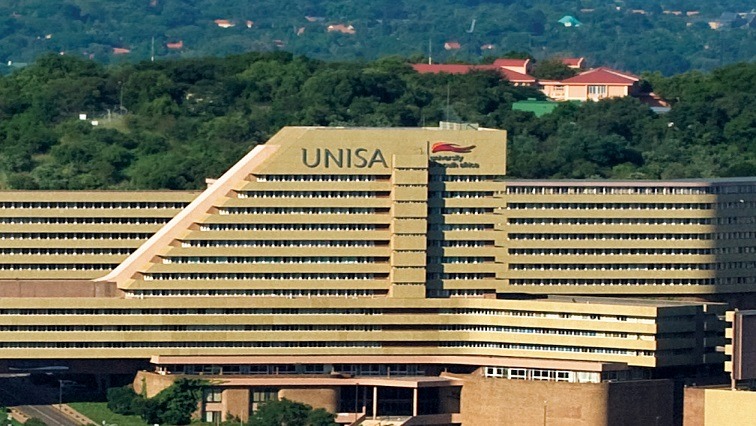
University of South Africa (UNISA)
Turnitin solution:

The University of South Africa (UNISA) stands as a beacon of comprehensive open distance, and e-learning (CODeL), serving a vast student body for over 150 years.
As it marches towards a fully online future by 2030, UNISA faces the monumental task of upholding academic integrity across its globally diverse and geographically dispersed student body. This is intensified by limited in-person interaction with faculty and the complexities introduced by AI.
Navigating challenges
Erica Flinspach-Van der Walt, long-time Turnitin system administrator and senior integrity officer at UNISA, highlights the immense scale and unique pressures of managing a remote “mega Institute with around 400,000 students,” noting how this compounds all aspects of their operations, including their CODeL model.
Distance, coupled with the rapid evolution of digital tools, has led to UNISA observing new forms of academic integrity challenges.
Erica notes an exponential rise in sophisticated attempts to circumvent originality checks, driven by students increasingly turning to AI tools, even employing AI humanizers to disguise content despite explicit instructions. She highlights she has “seen more [techniques] in the last two years than in the previous 15 years,” emphasizing that the core challenge lies in educating students about responsible AI use, rather than simply deterring misuse.
Some students also lack the ability to verify information or determine its truthfulness, leading to unintentional misconduct.
This created an urgent need for the institution to not only understand this new form of academic misconduct but also to equip its colleges with reliable tools that identify and address it effectively, ensuring consistent standards across its vast distance learning environment.
Strategies for success
Recognizing these challenges, UNISA adopted a proactive approach. Instead of seeking disparate tools for AI detection, they chose to integrate AI writing detection directly within their existing Turnitin framework from day one - a decision driven by a clear understanding of the importance of user familiarity, efficiency, and comprehensive insights.
Erica describes this strategic choice, acknowledging AI as a permanent reality: “For me, it was an absolute given to say that we have to be proactive. We have to be prepared and definitely with what we've seen in the last two years. It is absolutely necessary to have that option of an AI writing report and to know how much content is not original.”
UNISA's long-standing use of Turnitin for similarity detection made it a natural fit for AI writing detection, creating a single ecosystem for integrity solutions. This eliminated training burdens and provided convenience.
"We went straight in with Turnitin. It just simply made sense. To have an AI writing report next to your Similarity Report. To have it in one process. So it meant convenience."
We went straight in with Turnitin. It just simply made sense. To have an AI writing report next to your Similarity Report. To have it in one process. So it meant convenience.
![[erica_flinspach_van_der_walt_unisa:MEDIASTORE_LEAF]@584296b0](../assets/images/erica-flinspach-van-der-walt-unisa.png)
UNISA educates students via training sessions, using real-world writing samples. The emphasis is on teaching college staff to use Turnitin formatively to guide student development, rather than just punitively—a philosophy Erica has advocated for since she first started using Turnitin over a decade ago.
"We encourage the lecturers that they should make use of Turnitin on day one … Do it in the very first assignment, so that they understand the value of the tool in itself."
Achieving impact
UNISA's strategic and integrated approach using Turnitin has yielded significant positive outcomes, reinforcing its position as a leader in academic integrity within the ODL space.
Educator empowerment and enhanced insights
Upon ChatGPT’s 2022 release, UNISA educators were initially hesitant to embrace Turnitin’s AI writing detection capabilities, attributed to unfamiliarity of the technology. However, as they began manually identifying AI-generated content in student submissions, their perspective shifted dramatically. Erica describes the transformation among educators:
“Those who did not use Turnitin and then recognized AI in the student submissions, then realized the value that Turnitin has for them. They have really fully embraced it."
The comprehensive detection capabilities of Turnitin's combined Similarity Report and AI Writing Report provide UNISA with a holistic view of originality and a clearer, more nuanced understanding of student writing behaviors. This ensures the university can respond effectively to all forms of academic misconduct.
Parallel reports simplify insights for lecturers, allowing more time for student guidance and less for administrative checks.
Erica highlights how Turnitin helps identify the evolving nature of misconduct, noting that AI is now used for specific chapters where traditional plagiarism was once common. Turnitin's AI writing report is crucial for identifying these granular instances of AI-generated content, providing detailed insights into where and how AI is being used in student submissions, module codes being more susceptible to AI misuse and why students engage in academic misconduct.
Informed policy amid evolving challenges
Advanced reporting allows UNISA to develop informed academic policies and targeted AI literacy initiatives.
UNISA is developing an updated policy regarding AI use, with practical experience and Turnitin insights instrumental in its comprehensive crafting. “We have a tool that can assist us to review what students do with AI,” Erica explains, as this visibility moves policy development beyond anecdotal evidence to data-informed decisions.
Turnitin’s AI writing detection gives UNISA critical insights into AI usage. The data reveals that almost 40% of all submissions processed for AI content had AI-generated writing detected. This rate of detection confirms widespread student engagement with these tools and provides the visibility UNISA needs to focus educational efforts where most needed - guiding students toward ethical AI use.
"I think Turnitin supports that which has already been put in place, and I believe current UNISA policies were improved and enhanced by the information that we obtain through Turnitin.”
Turnitin supports that which has already been put in place, and I believe current UNISA policies were improved and enhanced by the information that we obtain through Turnitin.
Reinforcing academic value for the future
By consistently upholding academic standards and equipping students with the skills for authentic writing, UNISA ensures that its qualifications are respected.
Turnitin serves as a critical tool in demonstrating the university's commitment to academic integrity and protecting the value of student degrees. As Erica powerfully states, “all of the tools and policies are just there to ensure that value is attached to the qualification that the student has."
This commitment is particularly impressive given the dramatic increase in lecturers choosing to use Turnitin for their students’ submissions, resulting in a 190% increase in active users and a 235% rise in submissions.
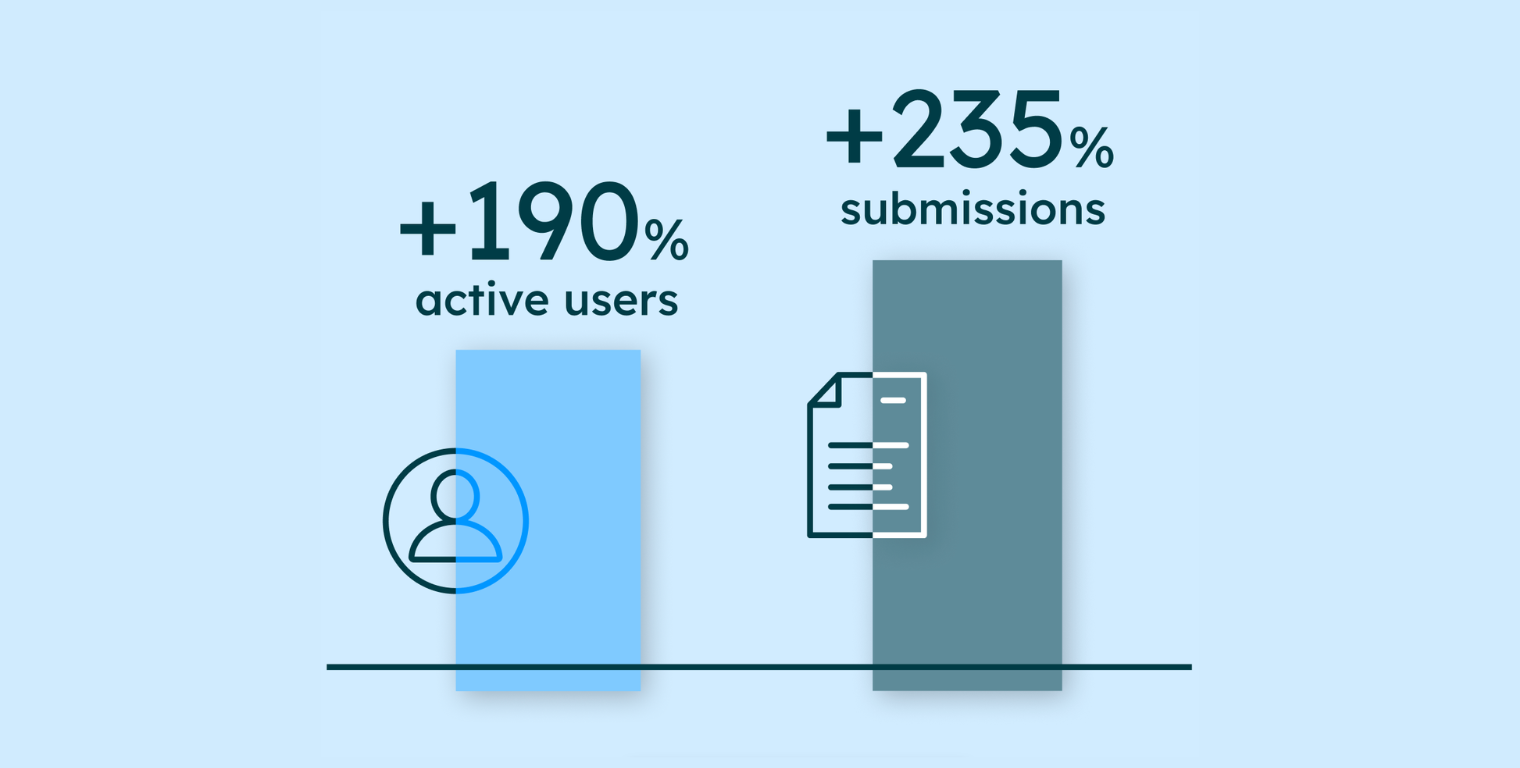
Despite this immense growth, UNISA has not only maintained but strengthened its control over integrity risks, demonstrating the remarkable scalability and effectiveness of its strategies.
Erica's experience with Turnitin's “continuous research” reinforces UNISA’s trust in its ability to keep pace with evolving AI capabilities and future-proof its integrity efforts. She adds, "It’s definitely clear that Turnitin didn't just develop the tool and then say ‘there is the tool’." This proactive stance and confidence in an evolving solution provide UNISA strategic advantage in a rapidly changing technological landscape.

Motto
"Pro gentibus sapientia" meaning "learning in service to humanity"
Mission
UNISA strives to be a comprehensive, open, distance and e-Learning (CODeL) institution that produces excellent scholarship and research, provides quality tuition and fosters active community engagement.