At a glance
Chiang Mai University
Turnitin solution:

The limitations of traditional grading methods
Chiang Mai University (CMU) is a leading university in Thailand dedicated to high-quality education that equips students with the knowledge of tomorrow. Its Department of Computer Engineering faced a recurring challenge: grading large volumes of assignments and exams while maintaining accuracy and efficiency.
For courses with multiple graders, manual grading was especially time-consuming and prone to errors. Faculty often had to physically carry stacks of paper exams, manually calculate scores, and coordinate grading among multiple staff—all under tight deadlines.
Several faculty members in the department recall the challenges experienced, in terms of educator workload and accountability for student outcomes.
“Manual grading is time-consuming and stressful,” explains Assistant Professor, Kampol Woradit, Ph.D. “GPA is crucial for every student, and graders need to make sure that decisions are fair, consistent, and perfectly correct.”
“Our course had multiple graders, and hardcopy homework submissions made it hard to circulate them evenly and fairly”, says Lecturer Chinawat Isradisaikul, Ph.D. “Graders couldn't work in parallel.”
Peer recommendations and piloting a better way to grade
The department discovered Gradescope through word-of-mouth recommendations from colleagues and academic networks. Chinawat trialled it in 2018 after learning of successful implementations at U.S. universities. Others were gradually introduced by colleagues who demonstrated its features and added value for courses with coding or bubble sheet exams.
“The lecturers of our coding courses started using Gradescope and highly recommended it to everyone in the department,” Kampol recalls. “After hearing about its advantages from my colleague, I believed it could solve many of the problems we faced with manual grading.”
Assistant Professor Navadon Khunlertgit, Ph.D. adds: “I was excited to hear that it boosts grading productivity and improves student-instructor interaction through feedback and clarifications.”
The Department of Computer Engineering was also exploring Gradecope as a digital storage solution for graded assignments and exams to align with their quality assurance protocols and broader digital strategy plans.
Gradescope has totally improved how I grade physical assignments and how I interact with students after posting grades. It saves a considerable amount of my work time.
![[navadon_cmyk:MEDIASTORE_LEAF]@1c29d94b](../assets/images/photos/headshots/navadon-cmyk.jpg)
Digital efficiencies replace manual burdens via Gradescope
Gradescope’s asynchronous, digital grading model allows faculty to grade various assessment types anywhere, anytime, without handling physical exams. The difference has been both immediate and measurable in daily practice: “It instantly saved time and made grading much easier”, says Navadon.
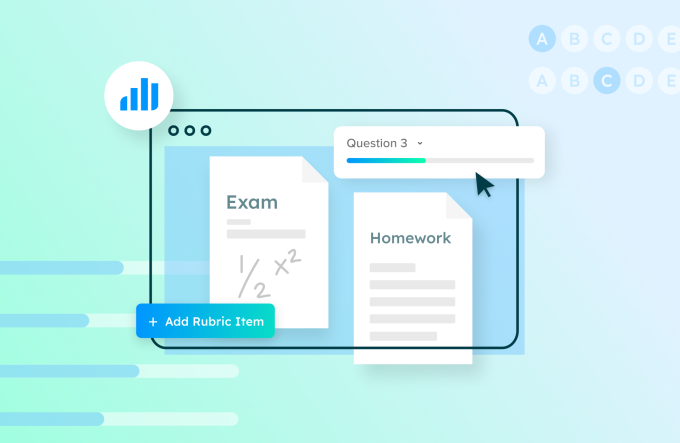
Faculty members praise the AI-powered answer grouping and grading-by-question features that allow faculty to assess similar responses simultaneously, making grading faster but also more consistent. Combined with learning data and item analysis they’re using to track student performance and guide educators’ grading efforts, Kampol says it “reassures both faculty and students and reinforces assessment as a true part of the learning process.”
Additional features such as PDF splitting and pre-loaded student lists further reduce administrative tasks, freeing faculty to focus on quality feedback rather than repetitive work. For example, Chinawat explains that splitting a PDF into multiple submissions for 100 students—an exercise that would have taken days manually—only takes about an hour with Gradescope.
Kampol, too, has experienced these benefits firsthand: “Gradescope has significantly impacted my daily work by cutting grading time. With pre-loaded student lists, scanned bubble sheets are processed and scores populated in the gradebook in under a minute, and I’m not worried that there are any grading mistakes.”
For Chinawat, a key realization of Gradescope’s value was that rubrics can be dynamically adjusted at any point in the grading process. Likewise for Assistant Professor Yuthapong Somchit, Ph.D., it was the flexibility it unlocks: “Gradescope makes grading paper-based exams feel like grading online exams. I can grade from anywhere as long as I have a PC and an internet connection, without needing to pick up hard copies or worry about them getting lost.”
With Gradescope driving more efficient student assessment, the learning environment at the institution now favors hybrid learning and they’re expanding online assessment.
Key results:
- Fast, digital grading has eliminated manual inefficiencies
- Higher accuracy and consistency achieved by parallel graders
- Learning analytics enhance teaching and assessment design
- Timely student feedback is driving performance improvements
Advancing learning and teaching outcomes
CMU’s Department of Computer Engineering is using Gradescope to not only streamline grading but also enhance assessment performance, benefiting instructors and students alike.
Utilizing the powerful learning data and item analysis, instructors can identify questions that are too difficult or too easy, and track student performance on specific topics, informing future teaching and assessment design. “With faster assessment cycles, instructors can adjust their teaching in real-time and support student learning more effectively,” says Kampol.
Previously, end-of-semester feedback was far less timely and actionable for students. Now, learners obtain feedback mid-semester and can improve before it’s too late. Similarly, instructors don’t have to wait until the end of the semester to gauge student performance.
For Navadon, their investment in Gradescope represents both a commitment to student learning and to maintaining quality standards: “Gradescope informs and supports learning through accountability and transparency, allowing learners to clearly see areas for improvement. For courses with multiple graders, it also provides a valuable mechanism for tracing back and correcting any potential grading inconsistencies.”
According to faculty, the student response to Gradescope has been positive, with Chinawat sharing that students love its grading transparency. Kampol adds that students trust in the accuracy of the platform and appreciate receiving results soon after the exam to scaffold their learning.
Reflecting on Gradescope’s impact in the Department of Computer Engineering, faculty report reduced stress, higher productivity, and stronger learner engagement. They’re able to spend more time refining their instruction and supporting student growth, confident that grading is both consistent and fair.
Chiang Mai University’s successful implementation of Gradescope was made possible through Turnitin’s partnership with iGroup Thailand. “iGroup has been a long-standing and trusted partner of Turnitin, and together we continue to support institutions in upholding academic integrity. The success of Chiang Mai University’s solution is a testament to the strength of our partnership,” said Todd Baker, VP of Alliances.
I love Gradescope because it transforms grading from a burden into a meaningful part of the learning journey.
![[kampol_cmyk:MEDIASTORE_LEAF]@3cf24c93](../assets/images/photos/headshots/kampol-cmyk.jpg)
Chiang Mai University
Department mission:
To equip students with the knowledge of tomorrow for their learning today.