

Table of contents
- How can educators transition from academic integrity to learning integrity?
- How can AI unlock new pedagogical possibilities beyond detection?
- How do institutions balance verification and trust in the AI era?
- What is the path forward for Malaysian higher education?
- Consensus from Kuala Lumpur Turnitin customer roundtable:
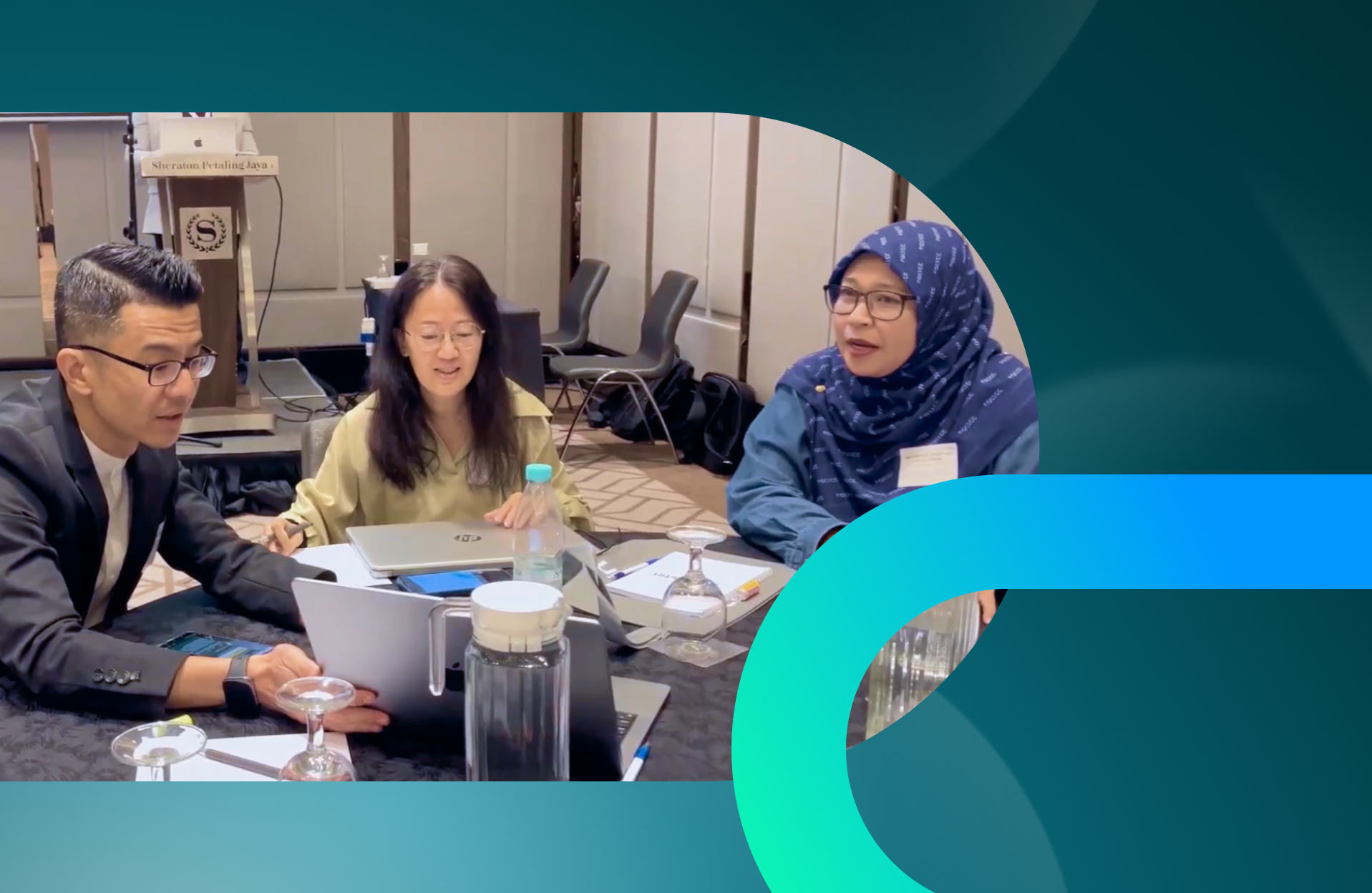
Turnitin’s recent Kuala Lumpur roundtable gathered leaders from Malaysia’s top institutions—including Universiti Malaya, Taylor's University, and Sunway University—to explore a pivotal question: How do we guarantee excellence in the age of generative AI? The atmosphere was one of cautious optimism. While many institutions feel prepared for AI integration, the security of assessments remains a top strategic priority. Discussions highlighted that AI is not just a challenge to be managed, but a catalyst for rethinking the foundations of higher education.
What you need to know
- By shifting from "academic integrity" to "learning Integrity", institutions are focusing on process-driven assurance to maintain excellence in an AI-enabled landscape.
- Institutions are implementing "assurance of learning" through authentic assessment, AI disclosure practices, and tools like Turnitin Clarity.
- These models humanize digital education, allowing educators to act as mentors while providing a defensible audit trail of the student's writing process.
How can educators transition from academic integrity to learning integrity?
Dr. Lisa Tung from Taylor’s University suggests that reimagining assessment requires a transition from "academic integrity" to "learning integrity," where learning is evidenced through reasoning, ethical judgment, and critical evaluation.
During the Kuala Lumpur customer roundtable, Dr. Tung invited participants to reconsider what meaningful learning looks like when AI can generate outputs, encouraging a shift toward preserving the human dimensions of education.
This "Assurance of Learning" (AoL) is about intentional assessment design. TS. Dr. Wong Lai Wan of Xiamen University Malaysia reframed AI as a mirror, urging institutions to look inward at intent and growth. This introspection helps us rethink not just how we assess, but what our qualifications truly represent in a world where the "table has already turned."
How can AI unlock new pedagogical possibilities beyond detection?
Pierre Louis Gernier emphasizes that AI is unlocking new creative and pedagogical possibilities by encouraging educators to move from "thinkers" to "tinkerers," who embrace experimentation and rapid prototyping to reshape learning experiences.
Gernier’s insights during the roundtable suggest that the conversation must extend beyond safeguarding integrity to reshaping the learning experience itself.
This shift involves looking at AI not just as a challenge to be managed, but as a catalyst for rethinking the foundations of higher education. By moving toward experimentation, institutions can find new ways to engage students that go beyond the limitations of traditional detection-based models.
How do institutions balance verification and trust in the AI era?
Institutions can balance the "Verification vs. Trust" paradox by implementing alternative models like Viva Voce (oral exams) and controlled in-class conditions that maintain the rigorous standards required by the Malaysian Qualifications Agency (MQA).
Debate at the roundtable sparked around how to handle this paradox while scaling these for high-enrollment courses without overwhelming staff.
Technology like Turnitin Clarity can support this balance by providing visibility into student thinking. By tracking the writing process, it acts as a "Socratic partner" for students and a defensible audit trail for lecturers.
What is the path forward for Malaysian higher education?
Malaysia’s path forward is defined by a commitment to "humanizing" digital education and making the learning process visible through reflective, human-centered models.
While challenges like AI literacy gaps and resource constraints remain, the consensus was clear: the future of Malaysian higher education lies in seeing how a student learns, not just what they submit.
Ultimately, the roundtable reinforced the importance of moving toward reflective models. By embracing change and making learning visible, Malaysian higher education can uphold integrity while fostering innovation.
Consensus from Kuala Lumpur Turnitin customer roundtable:
AI is not just a challenge to be managed, but a catalyst for rethinking the foundations of higher education. The future of Malaysian higher education lies in making learning visible.
About the author
Chukwudi Ogoh is an Academic Strategy Consultant at Turnitin, working across Asia Pacific and Europe, Middle East and Africa to help institutions enhance student learning outcomes through effective assessment, feedback, and academic integrity practices. He collaborates with senior leaders, academics, and teaching teams to align institutional priorities with solutions such as Turnitin Feedback Studio, Gradescope, Turnitin Originality, and Turnitin Clarity. With more than a decade of experience in higher education and edtech, he brings expertise in pedagogy, digital transformation, and assessment innovation.
Follow Chukwudi on LinkedIn